Soft corals are the sensible first purchase for most new reef tanks. They forgive the occasional slip in water quality, they don't need the calcium and alkalinity dosing that stony corals demand, and most grow quickly enough that you can see real progress week by week. The eight below are widely available from UK shops and frag swaps, tolerate a wide range of conditions, and will settle happily in a tank that is still finding its feet.
Why soft corals suit a first reef tank
Soft corals build their bodies from water and protein rather than calcium carbonate, so they place almost no demand on your alkalinity and calcium. That matters while you're still learning how your tank behaves. They also cope with nutrient levels that would brown out or kill many SPS corals, and most tolerate anything from modest to fairly bright lighting.
Easy is not the same as indestructible. They still need stable salinity around 1.024–1.026, a steady temperature of roughly 24–26°C, and zero ammonia or nitrite. Let the tank cycle properly first — several weeks with live rock or a bottled bacteria product, testing until readings settle — before you add anything.
The eight hardy species
Mushrooms and polyps
Mushroom corals (Discosoma, Rhodactis). The beginner's best friend. They come in reds, greens, purples and blues, sit happily in low light and gentle flow, and multiply by splitting or leaving buds behind. Rhodactis, sometimes sold as hairy mushrooms, are larger and more textured. Put them on a rock you can move, because they will spread.
Ricordea florida. The colourful cousin, wanting a little more light than plain mushrooms. It settles best on a flat piece of rock where the base can attach properly. Slower to spread, which is often a bonus. Leave Ricordea yuma until later; it is noticeably fussier.
Zoanthids (Zoanthus). Small, bright, colony-forming polyps that grow into mats over rock. Tolerant of most conditions and happiest under moderate light. Keep them on an isolated rock if you don't want them everywhere in two years' time.
Leathers and tree corals
Toadstool leather (Sarcophyton). A big, fleshy coral with a stalk and a wide cap, and arguably the classic first softie. It sheds a waxy film every few weeks, so give it moderate flow to blow the film away. Expect it to close up and sulk for a few days after being moved or posted — that is normal, not a death sentence.
Finger leather (Sinularia). Fast-growing, forgiving, and often the coral that convinces people to start fragging. It tolerates a wide range of light and flow and can get large, so leave headroom above it.
Kenya tree (Capnella). Attractive, tree-like and almost impossible to kill, but it drops branches that settle elsewhere. Fine in a soft coral tank, irritating in a mixed reef. Give it its own rock.
Encrusting and pulsing
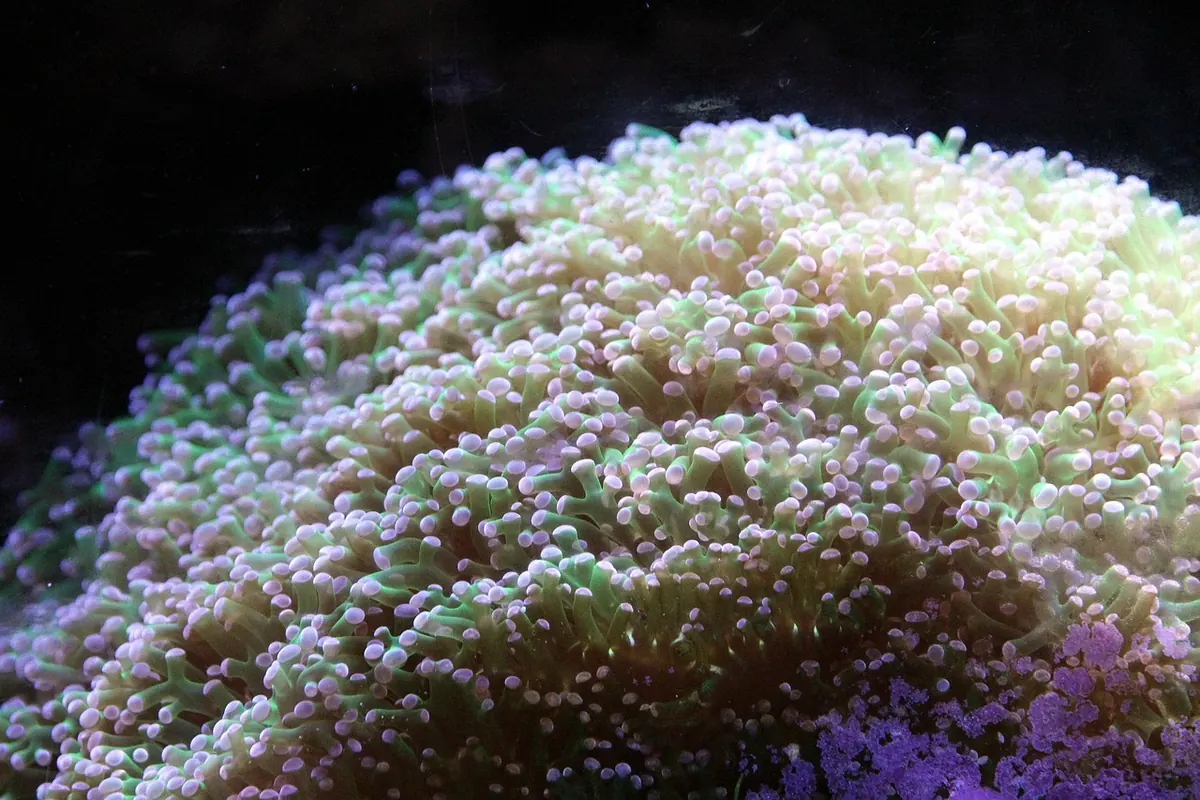
Green star polyps (Pachyclavularia). A purple mat with bright green polyps that creeps steadily over rock and, left unchecked, over your other corals. Some treat it as a weed, others love it. Isolate it on a rock island surrounded by sand.
Pulsing Xenia. The rhythmic pulsing is a genuine talking point. Xenia likes moderate light, tolerates higher nutrients and grows quickly — then occasionally collapses overnight for no obvious reason. Keep it on a separate rock so a crash doesn't take anything else with it.
Placement: getting it right the first time
Most soft coral problems come from placement rather than water chemistry.
- Fix corals to small pieces of rock with reef-safe glue or putty, then place the whole piece. Moving them later becomes far easier.
- Keep spreaders — green star polyps, Xenia, Kenya tree — on isolated rock islands surrounded by sand.
- Leave a few centimetres between leathers and anything you value. They grow, and they shade whatever sits beneath them.
- Put mushrooms and Ricordea low to mid tank, leathers and Xenia mid to upper, and never aim a powerhead directly at any of them.
- Dip new arrivals and give them a few quiet days before deciding on a final spot.
Light, flow and water
Soft corals don't need expensive lighting. Many thrive under a modest LED fixture run at half power, and most will tell you if it's too much by staying closed or shrinking. Flow matters more than beginners expect: enough to sway the polyps gently and keep a leather's surface clear, but not so much that mushrooms peel off the rock.
Test alkalinity, calcium and magnesium anyway, so you understand your tank before adding stony corals. Run a skimmer or use activated carbon if you keep several leathers together — they release compounds that can suppress nearby corals, and carbon helps pull them out.
Growth, fragging and the odd problem
Once a soft coral settles, expect growth. Fragging is straightforward: cut a piece with sharp scissors, attach it to a small piece of rubble with glue or a loose rubber band, and let it heal. Wear gloves when handling zoanthids, and never boil or scrub rocks carrying them — some related species contain palytoxin, and the dust or fumes are the risk. Wash your hands afterwards and keep the job out of the kitchen.
Watch for corals that melt into brown sludge, which usually points to a bacterial issue or a big water quality swing. Remove the affected piece, check your parameters and do a water change. A leather that stays closed for a few days is usually just shedding, so leave it alone.
A simple plan for your first softie tank
Start with one toadstool, one mushroom rock and one zoanthid colony. Let them settle for a month, watch how they respond to your lighting and flow, then adjust. Add Xenia, green star polyps or a Kenya tree only when you're sure you want them and have an isolated rock ready. Feed lightly, keep up regular water changes, and don't chase numbers that aren't causing a problem. Soft corals reward patience far more than tinkering — and within a year you'll have a tank full of colour and a few frags to swap at your local club.
Photo: zoosnow / Pixabay